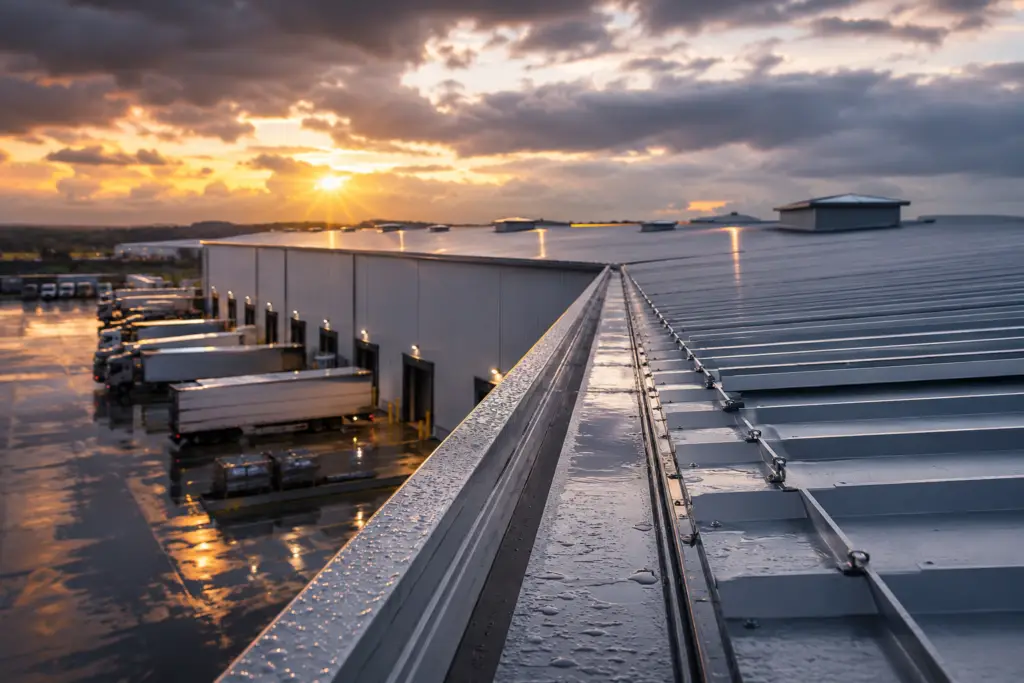
Distribution Centre Roofing Brisbane
Brisbane’s logistics sector has changed significantly over the last decade. Distribution centres are now larger, faster moving and more operationally demanding than traditional warehouse facilities. Across industrial corridors in Wacol, Heathwood, Richlands and the TradeCoast precinct, many warehouses operate continuously with freight movements, automated inventory systems and strict dispatch schedules that leave very little room for disruption.
In these environments, roofing failures rarely stay isolated for long. A leak above a pallet racking zone can quickly spread into stock damage, interrupted dispatch operations and safety concerns around active forklift traffic areas. Even relatively minor roofing issues may escalate rapidly once water enters electrical systems, insulation layers or high movement warehouse zones.
For facility managers and industrial property owners, roofing performance has become closely tied to operational continuity. Businesses searching for distribution centre roofing Brisbane are often dealing with ageing roofing systems, recurring storm related leaks or long term maintenance issues that can no longer be solved with temporary repairs.
At Envy Roofing, we work with industrial and logistics facilities across Southeast Queensland delivering roofing solutions designed for active warehouse environments, large span structures and long term asset protection.
Why Roofing Problems Escalate Faster in Distribution Centres
Industrial roofing systems experience different pressures compared to standard commercial buildings. Distribution centres combine wide roof spans with high internal heat loads, mechanical infrastructure, rooftop services and constant operational movement beneath the roof structure itself.
Over time, this creates ongoing stress across fasteners, roof laps, penetrations and drainage systems.
Large Brisbane warehouses regularly expand and contract throughout the day as roof temperatures rise under intense Queensland sun exposure before cooling rapidly overnight. This constant thermal movement gradually weakens waterproofing points across ageing roofing systems. The problem becomes more noticeable on facilities that have already undergone multiple service upgrades over many years, particularly where HVAC systems, solar installations or ventilation penetrations were added after the original roof installation.
Many logistics facilities also continue operating while maintenance works take place. Unlike smaller commercial sites that can temporarily close sections of the building, distribution centres often need uninterrupted access to loading docks, dispatch zones and internal traffic corridors throughout roofing projects.
That operational pressure changes how industrial roofing work must be planned and delivered.
Brisbane Weather Creates Additional Pressure on Industrial Roofs
Queensland weather conditions accelerate roofing deterioration far more aggressively than many facility owners initially expect.
In Brisbane distribution centres, roof structures are exposed to prolonged UV loading, high humidity and sudden storm activity throughout much of the year. During summer periods, roof sheet temperatures can increase dramatically across large open warehouse spans, particularly on darker roofing materials with limited insulation performance beneath them.
This repeated heat loading contributes to long term movement around:
- roof fixings
- sheet laps
- flashings
- penetrations
- gutter junctions
Once waterproofing begins deteriorating, storm activity usually exposes weaknesses quickly.
Facilities located closer to the Port of Brisbane and eastern industrial corridors often experience additional corrosion pressure from salt laden coastal airflow. On older warehouses, corrosion commonly develops around fasteners, sheet overlaps and poorly draining roof sections where moisture remains trapped over extended periods.
In many cases, visible leaks only appear after corrosion has already spread beneath sections of the roofing system.
Why Box Gutters Become a Major Problem in Large Warehouses
One of the most overlooked issues in industrial roofing is box gutter performance.
Many older Brisbane warehouses were designed decades ago under very different rainfall assumptions. As storm intensity increases across South East Queensland, undersized or poorly maintained drainage systems struggle to move water efficiently during heavy rain events.
Once debris, corrosion or drainage restrictions begin slowing water flow, box gutters can overflow surprisingly fast.
In active logistics facilities, that overflow rarely stays contained to external roof areas. Water intrusion often spreads directly into warehouse operations, affecting inventory storage, dispatch systems and internal ceiling spaces. Repeated moisture exposure may also contribute to corrosion inside structural roof supports over time.
Facilities with long roof spans are particularly vulnerable because large catchment areas direct substantial water volumes into relatively concentrated drainage points during storms.
Many industrial leak investigations eventually trace back to drainage failures rather than roof sheets themselves.
Condensation Problems Inside Distribution Centres
Not every industrial roofing problem begins from external storm damage.
Condensation remains one of the most persistent issues inside large distribution facilities across Brisbane, especially in warehouses operating with temperature controlled storage or limited ventilation movement.
Warm humid air naturally rises into roof cavities where it meets cooler roof surfaces during overnight temperature changes. Once condensation begins forming beneath roof sheets, moisture can gradually spread into insulation, ceiling spaces and internal warehouse areas.
This becomes especially problematic in facilities handling:
- refrigerated goods
- cold chain logistics
- packaging materials
- sensitive inventory
- paper storage
- electronics
In some warehouses, condensation drips are initially mistaken for roof leaks because moisture appears internally despite no obvious external storm damage.
Over time, persistent condensation can contribute to mould growth, insulation deterioration and corrosion beneath roofing systems that otherwise appear structurally sound from above.
Proper ventilation design and insulation performance play a major role in controlling these conditions.
Why Reactive Roof Repairs Eventually Stop Working
Many Brisbane distribution centres operate with roofing systems that have been patched repeatedly over many years. Small repairs may temporarily stop isolated leaks, although industrial roofing problems rarely remain isolated once broader deterioration begins developing across the roof structure.
One recurring issue in older logistics facilities is inconsistent repair history. Different contractors may have completed separate repairs over time using different sealants, fasteners or flashing methods across various roof sections. Eventually, the roofing system becomes a combination of ageing materials and temporary interventions with inconsistent long term performance.
At that stage, leaks often begin appearing in multiple locations simultaneously.
This is particularly common in warehouses with older metal roofing systems exposed to decades of thermal movement and storm activity. Once corrosion spreads beneath laps or around fixing points, surface repairs may no longer address the underlying deterioration occurring underneath the roof sheets themselves.
For many industrial property owners, planned reroofing becomes more practical than ongoing emergency callouts during storm season.
Roofing Works Inside Active Logistics Facilities
Industrial reroofing projects require far more operational coordination than standard commercial roofing work.
Distribution centres typically continue operating throughout roofing upgrades, meaning roofing contractors must work around active loading schedules, freight access routes, warehouse staffing and inventory protection requirements.
In some Brisbane logistics facilities, sections of the warehouse may process freight continuously across day and night shifts. That creates additional planning challenges when roofing works involve sheet removal, crane access or temporary weather exposure management.
The sequencing of industrial roofing projects becomes critically important in these environments.
Poorly staged roofing work can interrupt dispatch operations, restrict truck access or expose sensitive stock areas during unexpected weather changes. Experienced industrial roofing contractors understand how to progressively manage roofing zones while maintaining operational continuity wherever possible.
That planning process is often just as important as the roofing installation itself.
Long Term Asset Planning for Industrial Roofs
Many distribution centres across Brisbane are now approaching the age where major roofing upgrades become unavoidable.
For facility owners managing large industrial assets, roofing decisions increasingly form part of broader asset lifecycle planning rather than reactive maintenance alone.
A deteriorating warehouse roof affects far more than waterproofing performance. Over time, roofing problems may contribute to:
- rising maintenance costs
- operational disruptions
- internal temperature instability
- higher energy demand
- recurring inventory risks
- ongoing emergency repair callouts
Modern metal roofing systems can significantly improve long term reliability when designed appropriately for industrial logistics environments.
You can learn more about our industrial roofing services for warehouses, logistics hubs and large commercial facilities across Southeast Queensland.
Businesses planning upgrades across Brisbane can also explore our metal roof installation services for industrial reroofing and large scale roofing projects.
Why are industrial roofing projects more complex than standard commercial roofing?
Distribution centres operate with larger roof spans, active logistics movement, rooftop services and operational constraints that require far more planning than typical commercial roofing environments.
For industrial roofing support across Brisbane and Southeast Queensland, businesses can contact Envy Roofing or speak with the team on 1300 213 430.
FAQs
Why do warehouse roof leaks often spread quickly?
Large warehouse roofs collect significant water volumes during storms. Once water enters through weakened laps, penetrations or drainage systems, leaks can spread across insulation layers and internal ceiling spaces before becoming visible inside the facility.
What causes condensation inside distribution centres?
Condensation typically forms when warm humid air rises into cooler roof cavities. Poor ventilation, limited insulation performance and refrigerated warehouse operations commonly increase condensation risks.
Are box gutters a common failure point in industrial buildings?
Yes. Many older Brisbane warehouses operate with ageing or undersized box gutter systems that struggle during heavy rainfall events. Overflowing gutters are one of the most common causes of industrial water ingress.
Can a distribution centre continue operating during reroofing works?
In many cases, yes. Industrial roofing projects are usually staged carefully to minimise disruption to loading docks, dispatch operations and warehouse access areas.
When should a warehouse roof be replaced instead of repaired?
Repeated leaks, widespread corrosion, drainage failures and ongoing storm damage often indicate the roofing system is approaching the end of its practical lifespan. At that point, reroofing may provide better long term reliability than continued patch repairs.