Manufacturing Facility Roofing Brisbane
Brisbane manufacturing facilities place heavy demands on roofing systems. Heat, humidity, storm season, roof mounted services, production schedules and access restrictions all influence how a metal roof should be specified, repaired and maintained.
For manufacturing facility roofing Brisbane, the starting point is the way the site operates. A fabrication workshop, food production facility, packaging plant, distribution site or light industrial unit will each place different loads on the roof. The roofing system needs to protect the building while supporting the people, machinery and stock inside it.
Envy Roofing works with commercial and industrial clients across Brisbane, the Sunshine Coast and the Gold Coast, helping owners, builders and facility teams plan metal roofing works with clear communication and minimal disruption.
Roofing Requirements for Brisbane Manufacturing Facilities
A manufacturing facility roof needs reliable drainage, durable metal sheeting, well detailed penetrations, safe access and planning that suits the operating site. In Brisbane, heavy rain, humid conditions and high summer temperatures can expose weak roof details quickly, especially on large industrial buildings.
The main roofing requirements usually include:
- Strong water shedding during heavy rain
- Gutters, downpipes and overflow points that suit the roof area
- Correct detailing around vents, ducts, skylights, hatches and services
- Durable roof sheets, fixings and flashings suited to the site exposure
- Safe access paths for inspections, servicing and repairs
- Heat and ventilation considerations for the work areas below
- Staging that reduces interruption to daily operations
Manufacturing buildings often have valuable equipment under the roofline. Machinery, packaging, raw materials, electrical systems and finished goods can all be affected by water entry. A small leak above the wrong area can interrupt production, create clean up work and place pressure on staff.
For local project support, Envy Roofing provides roofing installations Brisbane for commercial and industrial sites across the region.
How Industrial Operations Shape the Roofing Scope
Industrial operations should guide the roofing scope before repair or replacement options are discussed. Operating hours, machinery layout, rooftop plant, internal heat loads, storage areas and access limits all influence the best roofing approach for a manufacturing site.
A contractor should understand how the facility runs before recommending work. The roof surface tells part of the story, while the production floor explains the risk. A leak above a low use storage corner is different from a leak above packaging stock, switchboards or production machinery.
Operational factors to review include:
- Heat from machinery, ovens, compressors or fabrication equipment
- Exhaust fans, ventilation systems, ducts and pipe penetrations
- Dust, residue or airborne material that can build up in gutters
- Forklift movement, loading bays and access restrictions below
- Stock areas that need reliable weather protection
- Rooftop plant requiring regular service access
- Production schedules that limit when roof works can take place
Industrial roofing should be planned around the building as a working asset. Envy Roofing supports this through industrial roofing services for active operational sites.
Common Roofing Problems in Brisbane Manufacturing Facilities
The most common roofing problems on Brisbane manufacturing facilities include leaks, blocked gutters, failed flashings, rusted fixings, damaged sheets, poor access paths and defects around roof penetrations. These issues often start small, then become more disruptive during heavy rain or high production periods.
Manufacturing roofs often contain more penetrations than standard warehouse roofs. Exhaust fans, ducts, vents, pipe supports, skylights, solar systems and access hatches all create detail points that need careful installation and regular inspection.
Warning signs include:
- Water marks on ceilings, walls, purlins or internal framing
- Leaks during wind driven rain
- Rust staining around screws, laps, flashings or gutters
- Overflow marks near box gutters, rainheads or downpipes
- Loose sheets or noisy roof areas during storms
- Damaged skylights or brittle roof sections
- Temporary patch repairs that keep failing
A useful inspection should look beyond the visible leak. It should consider water flow, roof pitch, gutter capacity, flashing design, foot traffic damage, old penetrations and the condition of fixings. This gives the owner a clearer path for repair, maintenance or staged replacement.
For mixed commercial and industrial sites, Envy Roofing also provides commercial roofing support.
Roof Drainage and Storm Readiness
Roof drainage is one of the highest priority areas for manufacturing facilities in Brisbane. A large industrial roof collects a significant volume of water during heavy rain. If gutters, sumps, overflows or downpipes are blocked, damaged or poorly falling, water can back up quickly.
Drainage problems often show up during storms, when there is little time to respond. For a manufacturing facility, water entry can affect machinery, stock, packaging, staff areas and electrical services. Regular checks help reduce the risk of sudden disruption.
A drainage review should cover:
Box gutters and external gutters
Sumps, rainheads and overflow points
Downpipes and stormwater discharge areas
Leaf, dust and debris build up
Ponding, staining or corrosion inside gutters
Roof falls and water flow paths
Areas where upper roofs discharge onto lower roofs
Sites near trees, dusty operations or multiple roof levels may need closer gutter attention. Pre storm season inspections can help identify issues before heavy weather arrives.
Roof Penetrations, Vents and Rooftop Plant
Roof penetrations are a common source of water entry on manufacturing buildings. Every vent, duct, pipe, fan, hatch and service support needs suitable flashing, seal condition and material compatibility. When penetrations are added over time by different trades, the roof can become difficult to maintain.
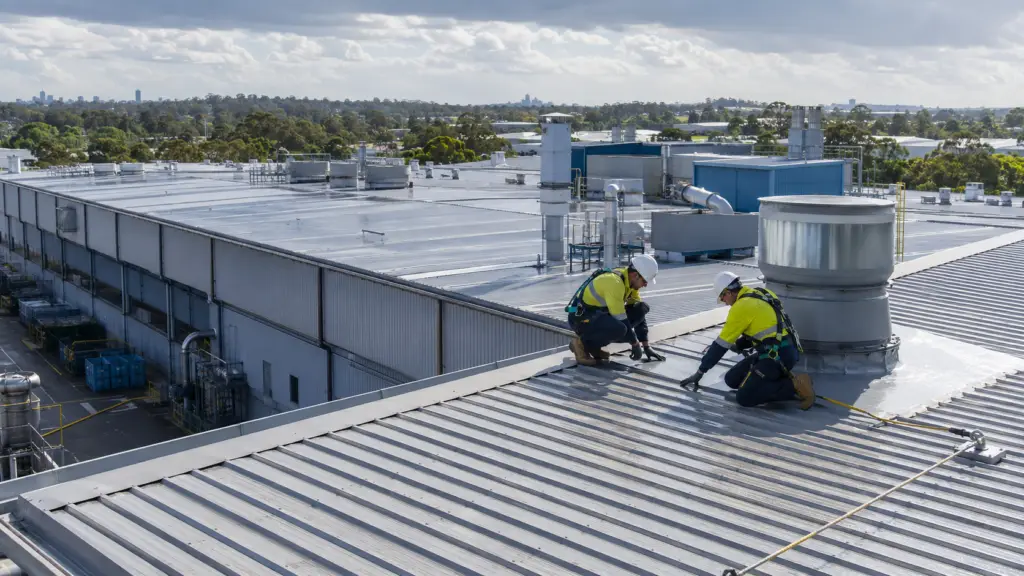
Manufacturing facilities often rely on roof mounted services connected to ventilation, refrigeration, extraction, air conditioning, solar or electrical systems. These assets need service access, but repeated foot traffic can damage metal sheets when no access path is provided.
A penetration and rooftop plant review should check:
Flashings around exhausts, vents and ducts
Seal condition around pipes and service penetrations
Support frames for roof mounted equipment
Walk paths used by service technicians
Signs of sheet crushing or traffic damage
Corrosion around discharge points
Old penetrations that are no longer used
Where access is frequent, roof walkways can help protect the roof profile and guide contractors along safer routes. This is useful for buildings with air conditioning units, solar systems, mechanical services or drainage points that need regular attention.
Heat, Ventilation and Internal Conditions
Heat can affect comfort, productivity and equipment performance inside Brisbane manufacturing facilities. Roof colour, insulation, ventilation, building height, machinery heat and airflow all influence internal conditions.
A roofing project is a sensible time to review insulation, ventilation and exhaust layout. Different facilities need different solutions. A fabrication workshop, cool room support area, packaging line and storage building will not perform the same way under heat and humidity.
Roofing related heat and ventilation considerations include:
Roof sheet condition and coating performance
Insulation condition where accessible
Ventilation around roof spaces and work areas
Exhaust discharge locations
Condensation risk in humid conditions
Skylight condition and light transmission
Airflow across large production zones
The best outcome is a roof system that supports the building environment and reduces avoidable strain on the site.
Planning Roof Works Around Active Production
Roof works on manufacturing facilities need planning around access, weather, deliveries, noise, staff movement, storage zones and production timing. Even minor repairs can cause disruption when the site layout has not been considered.
A proper site walk helps the contractor understand loading bays, emergency exits, production lines, storage areas, sensitive equipment and restricted zones. Once these areas are understood, the work can be staged around the way the business operates.
Planning should consider:
Which roof areas present the highest water entry risk
Which internal zones contain high value equipment or stock
When production is quieter
Where materials can be delivered and stored
How roofers will access the work area
How weather may affect open roof sections
Who needs updates before and during the project
Envy Roofing takes a site aware approach to metal roof installation, repairs and replacement works. The aim is to make the process manageable for the people running the facility.
When Repair Is Enough and When Replacement Is Better
Some manufacturing roofs need targeted repairs. Others are better suited to staged replacement or a full metal roof upgrade. The decision depends on age, corrosion, fastener condition, leak history, drainage performance and the operational value of the areas below.
Repair may be suitable when the issue is isolated, surrounding sheets are sound and drainage is working as intended.
Replacement may be the better option when:
- Leaks are recurring across several areas
- Fasteners are failing throughout the roof
- Gutters are rusted, overloaded or poorly falling
- Flashings are worn or poorly detailed
- The roof has many old penetrations and patch repairs
- Storm damage has affected sheet integrity
- The building is being upgraded for future use
A clear inspection report should separate urgent leak risks from longer term roof asset planning. That helps owners, builders and facility managers make decisions with less guesswork.
Why Local Brisbane Experience Helps
Brisbane roofing conditions are shaped by heat, storm activity, humidity, industrial zoning and the wider South East Queensland climate. Local experience helps with project timing, drainage expectations, access planning, material handling and communication with site teams.
Envy Roofing is a family run roofing business working across Brisbane, the Sunshine Coast and the Gold Coast. The team focuses on metal roofing for commercial and industrial properties, with clear advice and practical planning for working sites.
You can learn more about the team on about us Envy Roofing or speak with Envy Roofing through contact.
FAQs
What should a Brisbane manufacturing facility roof be designed to handle?
A Brisbane manufacturing facility roof should handle heavy rain, heat, humidity, roof penetrations, roof mounted services and access needs. It should protect machinery, stock, electrical systems and staff areas while allowing safe inspection and maintenance across the roof.
How do I know if my manufacturing facility roof needs repair or replacement?
Repair may suit isolated leaks or localised damage. Replacement becomes more suitable when leaks return across multiple areas, fasteners are failing, gutters are rusted, roof sheets are damaged or older patches no longer hold up during storms.
Can Envy Roofing work around active industrial operations?
Yes. Roof works can often be staged around active industrial operations with proper planning. Access, weather, production schedules, loading areas, exclusion zones and site communication should be reviewed before work begins.
What causes leaks in manufacturing facility roofs?
Common leak sources include failed flashings, blocked gutters, loose fasteners, damaged roof sheets, old penetrations, skylights, rooftop plant supports and poor sealing around vents or ducts. Wind driven rain can also expose weak details that do not leak during lighter rain.
How often should a manufacturing roof be inspected?
A manufacturing roof should be inspected regularly and after major storms. Sites with box gutters, high roof traffic, rooftop plant, dust, exhaust systems or sensitive equipment below usually need closer attention than a basic storage building.
Why is roof access important on industrial buildings?
Roof access helps maintenance teams service rooftop plant, vents, air conditioning, solar equipment and drainage systems without damaging roof sheets. Planned access paths reduce traffic damage, improve inspection efficiency and help protect the roof over time.